
CBAM Deadline Approaches as EU Sets Carbon Removal Benchmark
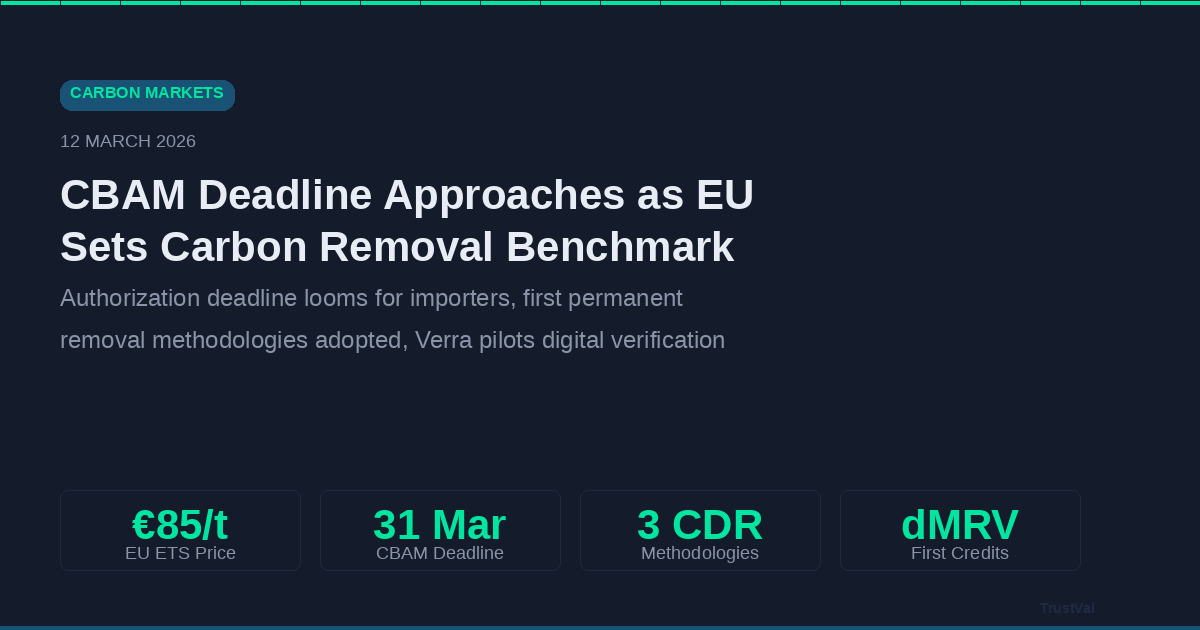
The EU CBAM authorization deadline on 31 March 2026 is reshaping global aluminum trade flows. Meanwhile, the Commission adopted its first permanent carbon removal methodologies under the CRCF, and Verra issued the first dMRV-verified credits.
CBAM Authorization Countdown
The EU Carbon Border Adjustment Mechanism has entered its definitive compliance phase. All importers of CBAM-covered goods — steel, aluminum, cement, fertilizers, electricity, and hydrogen — must hold Authorized CBAM Declarant status by 31 March 2026 to continue releasing goods into free circulation.
The impact on global aluminum trade is already visible. Producers in coal-reliant regions face a carbon cost gap of €50–€90 per tonne of CO₂, forcing many to redirect exports toward markets without carbon border pricing. European buyers have shifted aggressively to low-carbon suppliers, and regional premiums for EU-destined aluminum have spiked.
The European Commission will publish the first CBAM certificate price on 7 April 2026, calculated as the quarterly average of EU ETS auction clearing prices. While actual certificate purchases are deferred to February 2027, this price signal will set expectations for the cost of importing carbon-intensive goods into Europe.
EU Certifies First Permanent Carbon Removals
On 3 February 2026, the European Commission adopted its first Delegated Act under the Carbon Removal Certification Framework (CRCF). The legally binding methodologies cover three permanent carbon removal technologies: Direct Air Capture with Carbon Storage (DACCS), Biogenic Emissions Capture with Carbon Storage (BioCCS), and Biochar Carbon Removal (BCR).
The methodologies define what counts as one tonne of certified removal, set permanence requirements, and establish rules for leakage risks and liability. Projects using these technologies can now apply for EU certification, with the first certified credits expected to reach registries by late 2027.
Carbon farming methodologies are next in line, with adoption expected in summer 2026. The Commission will also assess potential inclusion of permanent removals in the EU ETS by mid-2026 — a development that could create significant demand pull for certified removal credits.
Verra Pilots Digital Verification
Verra has approved the first carbon credits under its digital Monitoring, Reporting, and Verification (dMRV) pilot. The credits come from a solar farm project in the Comoros, with the pilot allowing 80% of verified credits to be issued immediately and 20% held as a safeguard buffer.
The pilot is expanding to additional project types, including CCS and clean cookstoves. High-frequency issuance — monthly or bi-monthly rather than annually — reduces capital lock-up for project developers and accelerates credit delivery to buyers.
These three developments converge on a single theme: the carbon market is moving from periodic, manual verification toward continuous, digital, regulatory-grade monitoring. Companies that invest in dMRV infrastructure today will hold a structural advantage in both compliance and voluntary markets.
TrustVal helps corporate buyers and project developers navigate carbon markets with confidence.
Talk to our team about your carbon strategy: trustval.com/contact