CBAM's "Carbon Wall" Reshapes Global Aluminum Trade
The Definitive Phase Begins
The EU's Carbon Border Adjustment Mechanism entered its definitive financial phase on January 1, 2026. Importers now face real carbon costs on aluminum shipments. The mechanism replaces the transitional phase with binding financial obligations.
A critical deadline looms on March 31, 2026. All aluminum importers must obtain "Authorized CBAM Declarant" status by this date. Missing this deadline triggers penalties and trading restrictions for non-compliant importers.
CBAM covers five core product categories initially: aluminum, steel, cement, fertilizers, and hydrogen. The EU plans to expand this list to 180 downstream products. This expansion threatens to reshape supply chains across multiple industries simultaneously.
A Two-Tier Market Emerges
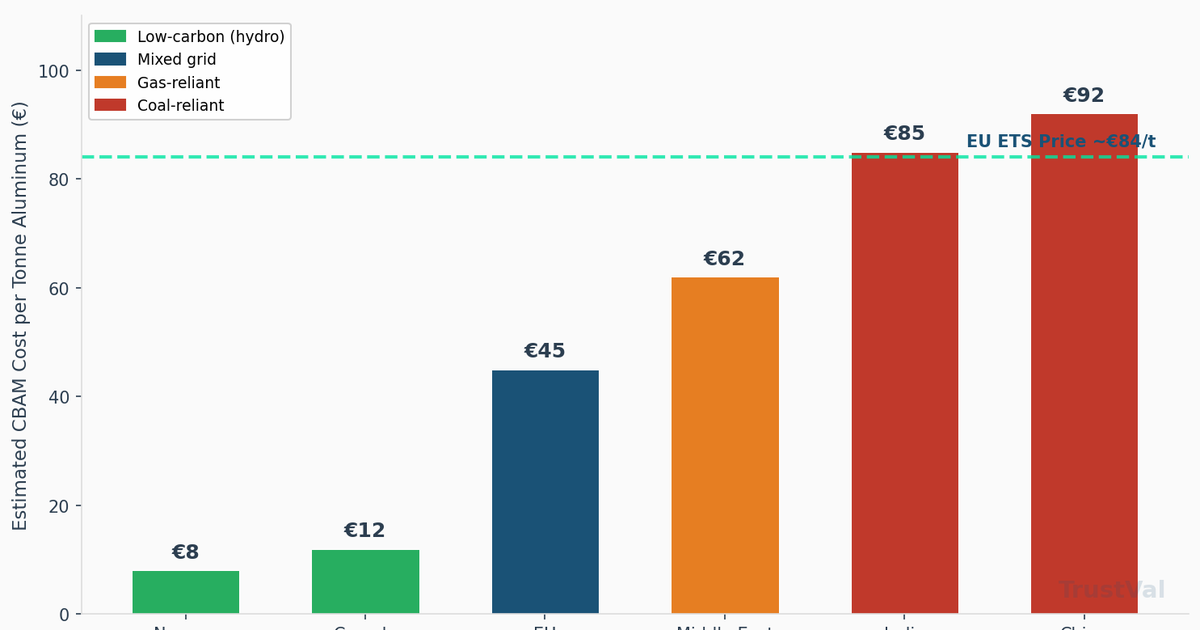
CBAM creates a two-tier pricing system in global aluminum markets. Low-carbon aluminum from hydroelectric or solar smelters commands a "green premium." Coal-reliant smelters face significant competitive disadvantages.
Current EU carbon prices hover around €85 per metric ton of CO₂. This price applies directly to imported aluminum carbon content. Producers sourced from coal-reliant regions face €50-90/t additional carbon cost gaps versus low-carbon competitors.
The financial impact drives immediate producer decisions. Many smelters in coal-reliant regions—particularly India and China—are redirecting exports toward Southeast Asia. Domestic market focus increases as EU market access becomes costlier.
Allowances Tighten Annually
Free carbon allowances decline by 2.5% in 2026 under CBAM rules. This reduction continues annually through 2035. Producers cannot rely on free allowances to offset rising carbon costs.
The mechanism functions like a hybrid system. Importers receive credit for carbon costs paid in origin countries. However, most coal-reliant smelters operate in jurisdictions without equivalent carbon pricing frameworks.
This creates permanent cost disadvantages for certain regions. Producers in high-carbon-intensity zones must either invest in emissions reduction or accept margin compression. Neither option proves painless for shareholders.
Supply Chain Realignment Accelerates
Global aluminum flows shift visibly toward non-EU markets. Scandinavian hydroelectric smelters maintain competitive advantages. Meanwhile, coal-reliant producers search for new customer bases outside EU borders.
Brazil and Canada benefit from low-cost renewable electricity. Their aluminum exports gain pricing advantages under CBAM. Southeast Asian smelters absorb redirected Asian exports previously destined for Europe.
The EU's carbon policy now functions as de facto trade protectionism. Domestic and allied low-carbon producers gain market share. Carbon-intensive regions face marginalization from high-value EU customer relationships.
What Importers Must Do Now
Immediate action items include supplier audits and emissions data collection. Obtain Authorized CBAM Declarant certification from EU customs authorities. Establish robust tracking systems for carbon intensity data per shipment.
Long-term supply strategy requires fundamental reconsideration. Diversifying aluminum sources toward low-carbon producers reduces CBAM exposure. Vertical integration with renewable-powered smelters becomes strategically valuable.
Financial modeling must incorporate rising carbon costs. Margin pressure extends beyond 2026 as free allowances decline annually. Strategic sourcing decisions made today determine competitiveness for the next decade.
CBAM fundamentally reshapes aluminum trade economics. The "carbon wall" separates low-carbon and high-carbon producers with escalating financial barriers. Importers and producers who adapt quickly maintain competitive positioning. Those who delay face permanent market share losses.
Sources
Stay Ahead of Carbon Regulation Changes
TrustVal monitors CBAM compliance requirements and carbon pricing shifts. Track declarant deadlines, allowance reductions, and market impacts in real time.
Join TrustVal's Carbon Regulation Alert Service for daily updates on CBAM implementation, carbon pricing movements, and supply chain implications.