CBAM's First 100 Days: 12,000 Operators, Scope Expansion, and What Comes Next
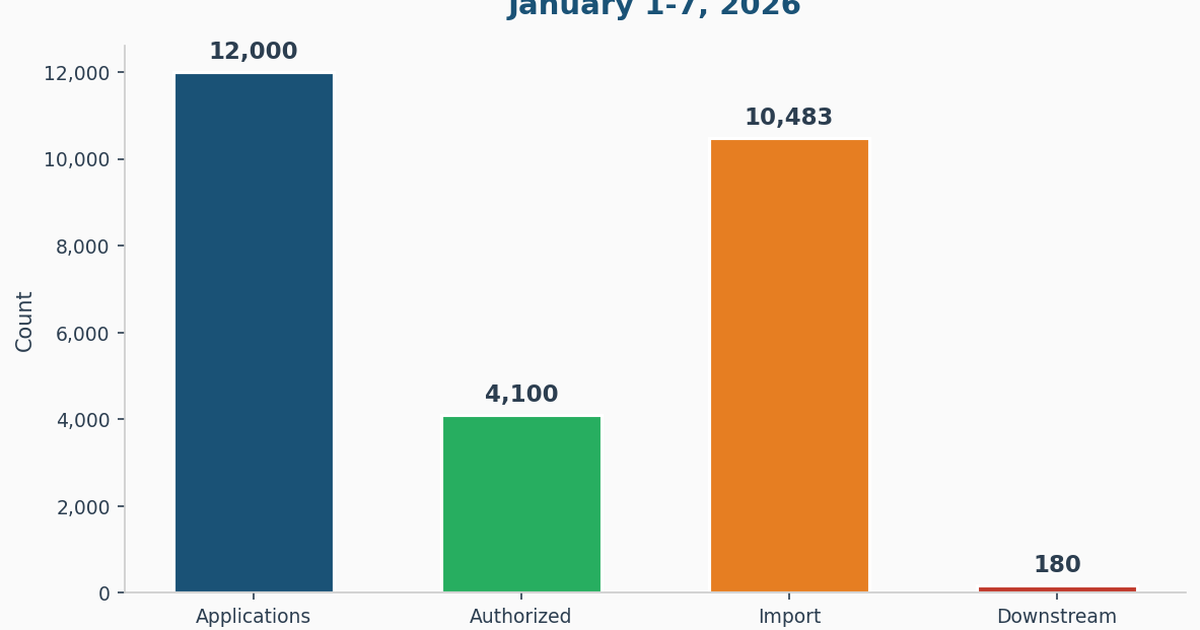
The EU's Carbon Border Adjustment Mechanism crossed from theory into reality on January 1, 2026. After three years of transitional reporting, CBAM now requires importers of carbon-intensive goods to purchase certificates matching the embedded emissions of their products. The first week alone processed over 10,000 import declarations automatically through integrated customs systems.
Six sectors sit in the crosshairs: aluminium, cement, electricity, fertilizers, iron and steel, and hydrogen. Importers must now hold authorized declarant status to bring these goods into the EU. More than 12,000 economic operators submitted applications by January 7, and 4,100 received authorisation across all 27 Member States.
Omnibus Simplifications Ease the Burden
The Commission's Omnibus package, which took effect in October 2025, streamlined several CBAM requirements. A new mass-based threshold exempts importers bringing in 50 tonnes or fewer of covered goods per year. The quarterly certificate-holding requirement dropped from 80% to 50% of embedded emissions. These changes aim to reduce administrative friction for smaller operators while keeping the mechanism's environmental integrity intact.
Scope Expansion: 180 Downstream Products
The Commission now proposes extending CBAM beyond basic materials. The plan targets finished and semi-finished products with high steel or aluminium content, adding 180 downstream goods to the scope. This expansion signals a clear direction: the EU intends to close loopholes where manufacturers could import processed goods to dodge carbon costs on raw materials.
International Pushback Intensifies
China escalated diplomatic pressure on CBAM's launch day, warning of potential retaliation. Russia filed a formal WTO challenge. India and South Africa raised compatibility concerns. The United States pushed for withdrawal during bilateral talks. Despite this, the EU maintains that CBAM complies with WTO rules and serves as a necessary measure to prevent carbon leakage.
A €1.5 Billion Revenue Stream
The Commission expects CBAM to generate approximately €1.5 billion in revenue by 2028. Part of this funds a temporary decarbonization fund, designed to reimburse EU exporters for CO₂ costs incurred during the transition period as free emission allowances phase out in 2026 and 2027.
What This Means for Carbon Market Participants
CBAM creates a direct link between the EU ETS carbon price and the cost of importing carbon-intensive goods. For corporate buyers, this means carbon pricing now affects procurement decisions, not just emissions trading desks. For project developers, the mechanism validates the economic logic of investing in lower-carbon production methods.
Several delegated acts remain pending, covering how carbon price deductions from third countries apply and how default emissions values work in practice. These technical details will shape the real-world compliance experience for thousands of importers over the coming months.
Sources
TrustVal helps corporate buyers and project developers navigate carbon markets with confidence. Talk to our team about your carbon strategy.
TrustVal provides carbon market advisory and valuation services. For more information, visit trustval.com.